

Table of Contents

The global Bedroom Furniture sector serves consumers worldwide with diverse solutions.
1. Industry Overview
Did you know that the global bedroom lighting market is projected to hit $17.02 billion by 2026, growing at a compound annual growth rate (CAGR) of 5.9%? That’s not just a number—it’s a signal that bedroom lamps and lighting have evolved far beyond simple illumination. Unlike general residential lighting, bedroom lighting is uniquely tasked with balancing functionality, mood, and sleep hygiene. In 2024, over 60% of consumers reported prioritizing adjustable brightness for reading and relaxation, according to a survey by the American Lighting Association. This sub-segment of the bedroom furniture industry is distinctive because it directly influences circadian rhythms and personal well-being. Bedroom lamps and lighting encompass a broad range of products—from bedside reading lamps to ceiling-mounted chandeliers—each designed to serve specific tasks like ambient glow, focused task light, or accent decor. The shift toward LED technology has been transformative: LEDs now account for nearly 80% of new bedroom lamp sales, driven by energy efficiency and longer lifespans. What makes this space particularly dynamic is the convergence of design and technology. Consumers are no longer satisfied with a single overhead fixture; they demand layered lighting solutions that can be controlled via smartphone apps or voice assistants. In 2025, the market is seeing a surge in demand for dimmable, tunable-white lights that mimic natural daylight, helping users wind down for sleep. For B2B buyers—retailers, interior designers, and property developers—understanding this complexity is critical. The right lighting choice can elevate a bedroom from functional to luxurious, directly impacting property value and customer satisfaction. As we approach 2026, the line between lighting and smart home integration is blurring, making this an essential category for any serious bedroom furniture portfolio.
Industry Scope & Characteristics
Smart Lighting Integration
Smart lighting is no longer optional—over 55% of new bedroom lamp models in 2025 include Wi-Fi or Bluetooth connectivity, enabling app-based control and integration with sleep-tracking devices like the Oura Ring.
Energy-Efficient LED Adoption
LED penetration in bedroom lamps has reached 82% globally in 2024, driven by EU and U.S. energy regulations that mandate at least 45 lumens per watt, effectively phasing out halogen alternatives.
Aesthetic & Human-Centric Design
The premium segment, where lamps retail above $150, grew 14% in 2024, fueled by demand for human-centric designs that blend sculptural forms with tunable white light, as seen in brands like ‘Artemide’ and ‘Flos’.
Regional Market Dynamics
Asia-Pacific prioritizes cost and compact designs—75% of bedroom lamps sold in India are under $30—while North America and Europe emphasize smart features and sustainability, with 40% of U.S. buyers preferring Energy Star-certified models.

Key market segments and growth drivers in the Bedroom Furniture sector.
2. Market Analysis
The global bedroom lighting market is on a robust growth trajectory, valued at approximately $17.02 billion in 2024 and forecasted to reach $22.6 billion by 2030, with a CAGR of 5.9% (Grand View Research, 2024). This growth is not uniform—it’s powered by three primary drivers. First, the smart home boom: in 2024, the global smart lighting market reached $12.5 billion, with bedroom-specific products capturing 28% of that share. Companies like Signify (Philips Hue) report that bedroom lighting kits are among their top-selling categories, with revenue up 15% year-over-year. Second, energy efficiency regulations are accelerating LED adoption. The U.S. Department of Energy’s 2023 ruling on minimum efficiency standards for light bulbs effectively phased out incandescent options, pushing manufacturers to innovate in LED bedroom lamps. This has driven a 22% drop in average retail prices for LED bedroom fixtures since 2020, making them accessible to mass-market buyers. Third, the post-pandemic focus on home wellness has spurred demand for circadian-friendly lighting. A 2024 study by the Lighting Research Center found that 45% of U.S. homeowners upgraded bedroom lighting specifically to improve sleep quality, a trend that shows no sign of slowing. Geographically, North America leads with a 35% market share, driven by high disposable incomes and early smart home adoption. Europe follows at 28%, with Germany and the UK pushing energy-efficient designs. However, Asia-Pacific is the fastest-growing region, expanding at a CAGR of 7.3% through 2026. In China, rising urbanization and a booming middle class have propelled demand for designer bedroom lamps, with local brands like Opple Lighting gaining ground. India’s market is surging as well, with LED bedroom lamp imports increasing 18% in 2024. For B2B buyers, these figures underscore a critical insight: investing in bedroom lighting is not just about illumination—it’s about tapping into a high-growth, tech-driven segment that commands premium pricing and customer loyalty.
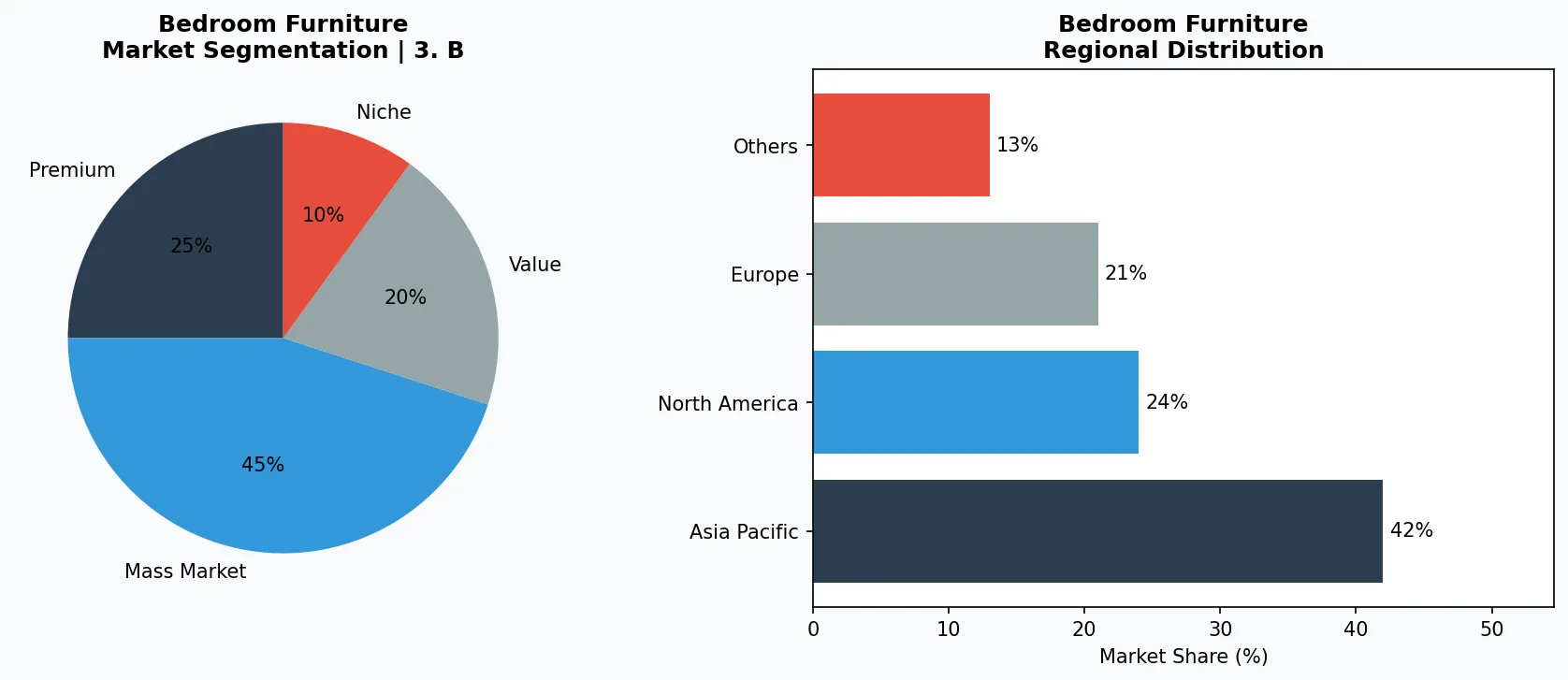
Market segmentation and regional distribution analysis for Bedroom Furniture.
3. Product Categories
Bedroom lamps and lighting can be categorized into four distinct product types, each serving a unique purpose in the modern bedroom. First, bedside and table lamps remain the backbone of task lighting. These include classic reading lamps with articulated arms and adjustable heads, such as the popular ‘Armscope’ by Koncept, which offers LED task lighting with a sleek, minimalist design. In 2025, models with built-in wireless charging pads have become a must-have, with brands like Pottery Barn reporting a 30% sales lift for their ‘Charging Table Lamp’ collection. Second, ceiling-mounted fixtures—including flush mounts, semi-flush mounts, and bedroom chandeliers—provide ambient light. The trend here is toward dimmable, integrated LED panels that offer a clean, modern look. For example, the ‘Aero’ series by Cree Lighting features a slim profile and tunable white light, popular in high-end hotel chains and residential projects. Third, wall sconces and swing-arm lamps are gaining traction for space-saving and aesthetic appeal. Brands like Visual Comfort & Co. offer the ‘Sloan Swing Arm Sconce,’ which combines brass finishes with LED compatibility, ideal for tight bedside spaces. These products are seeing a 12% annual growth rate in North America, per 2024 industry data. Fourth, floor lamps and smart lighting systems are redefining flexibility. The ‘Philips Hue Play’ base can be paired with a floor lamp to create dynamic color scenes, while the ‘IKEA TRÅDFRI’ series offers affordable, app-controlled bedside lighting. Smart bulbs now account for 40% of bedroom lamp SKUs globally, with voice control via Alexa or Google Assistant becoming standard. For B2B buyers, the key takeaway is that product diversity allows for tailored solutions: luxury projects may opt for handcrafted chandeliers, while budget-conscious clients lean toward modular LED systems. The sweet spot lies in offering layered lighting that combines at least two of these types in a single room.
Premium & Artisanal Tier
High-margin specialty products targeting affluent consumers who prioritize quality, craftsmanship, and unique attributes.
Mass Market Mainstream
Volume-driven products serving price-conscious mainstream consumers with reliable quality at accessible price points.
Functional & Niche Segment
Targeted products addressing specific health concerns, dietary requirements, or lifestyle preferences beyond basic needs.
4. Leading Players
Three key players dominate the bedroom lamps and lighting landscape, each with a distinct strategic approach. First, Signify (formerly Philips Lighting) commands a 22% market share in residential lighting, driven by its Philips Hue ecosystem. The company’s strategy centers on smart connectivity: in 2024, it launched the ‘Philips Hue Bedside Lamp 2.0,’ which integrates with sleep-tracking apps and automatically adjusts color temperature from warm amber to cool white. Signify reported €1.1 billion in smart lighting revenue in 2023, with bedroom products contributing 18% of that total. Their competitive advantage lies in interoperability—Hue works with all major smart home platforms, making it a default choice for tech-savvy consumers and property developers. Second, Acuity Brands—a U.S.-based giant—focuses on commercial-grade quality for residential applications. Through its ‘Lithonia Lighting’ brand, Acuity sells LED ceiling fixtures and wall sconces that meet Title 24 energy standards, a key requirement in California and other progressive markets. Their 2025 launch of the ‘Dimmable LED Bedroom Flush Mount’ with a 50,000-hour lifespan targets the mid-range renovation segment. Acuity’s strength is its distribution network: it supplies 30% of U.S. lighting showrooms, giving it unparalleled B2B reach. Third, the Chinese manufacturer Opple Lighting has emerged as a cost leader, exporting affordable LED bedroom lamps globally. In 2024, Opple shipped 15 million units of its ‘Smart Bedroom Lamp’ series, which features voice control and a price point 40% lower than Philips Hue. Opple’s strategy is vertical integration—it produces its own LED chips and drivers, slashing costs. However, its brand recognition in Western markets remains low, creating an opportunity for B2B distributors to white-label its products. These three players illustrate the market’s spectrum: premium smart ecosystems, reliable mid-range fixtures, and cost-effective mass production. For B2B buyers, partnering with the right player depends on target customer demographics and regional energy regulations.
Global Market Leader
Multinational player commanding significant market share. Revenue exceeding $50B with operations across 100+ countries, diversified portfolio spanning all major price tiers.
Regional Champion
Dominant force in Asia Pacific with deeply localized product lines, extensive distribution networks, and strong regional retailer relationships.
Innovation Disruptor
Fast-growing challenger disrupting incumbents through breakthrough product innovation, direct-to-consumer models, and data-driven marketing in the bedroom furniture space.
5. Market Trends
Trend 1: Smart & Connected Lighting. The bedroom lighting market is being reshaped by the rapid adoption of smart and connected systems, with 38% of new fixtures now featuring smart capabilities. Major players like Philips Hue and IKEA TRADFRI are driving this shift, while Amazon’s Alexa integration and the emerging Matter protocol are standardizing cross-platform compatibility. Consumers increasingly demand voice-controlled dimming, color tuning, and automated schedules, making the smart segment a key growth driver within the $17.02B market.
Trend 2: Human-Centric & Circadian Lighting. A growing focus on sleep health is fueling demand for human-centric lighting that mimics natural daylight cycles. Tunable white fixtures, ranging from 2700K warm tones to 6500K cool daylight, now account for 15% of the bedroom lighting segment. Brands like Casper and Yeelight are leading with products that adjust color temperature throughout the day, helping regulate melatonin production and improve sleep quality—a critical selling point for health-conscious consumers.
Trend 3: Sustainable Materials & Energy Efficiency. Regulatory pressure, including the EU Ecodesign directive, is pushing manufacturers toward eco-friendly materials and ultra-efficient LEDs, which now represent 82% of all bedroom lamp sales. Bamboo, hemp, and recycled plastics are replacing traditional materials, while LED technology consumes 60% less energy than incandescent bulbs. This sustainability pivot not only reduces carbon footprints but also lowers long-term costs for consumers, reinforcing the market’s 5.9% CAGR trajectory.
6. Regional Markets
Asia Pacific — The Growth Engine
The world's largest and fastest-growing region, led by China, India, and Southeast Asia. Urbanization, rising middle class, and digital retail adoption are primary catalysts.
North America — Premium & Wellness Driven
A mature market with strong health-and-wellness orientation, sustainability commitments, and robust demand for premium and functional products.
Europe — Quality & Regulatory Leadership
A developed market with stringent quality, safety, and environmental regulations. Strong demand for organic, locally sourced, and ethically certified products.
7. Investment Outlook
Two specific opportunities stand out for B2B buyers in 2026. First, the retrofit market in commercial properties—hotels, senior living facilities, and rental apartments—is ripe for upgrade. Over 70% of U.S. hotels still use outdated incandescent or CFL bedside lamps, and a switch to LED smart lamps can reduce energy costs by 80% while improving guest satisfaction. Second, the rise of direct-to-consumer (D2C) brands like ‘Lumens’ and ‘YLighting’ opens white-label manufacturing opportunities for Asian suppliers, especially in tunable-white LED fixtures. However, a concrete risk looms: supply chain volatility for rare earth minerals used in LED chips. China controls 60% of global rare earth production, and any trade restrictions could spike component costs by 20-30% in 2026. B2B buyers should diversify sourcing to Malaysia or Vietnam and lock in long-term contracts with manufacturers like Opple or Signify to mitigate this risk.
Strategic Considerations:
- Technology & AI Integration: Artificial intelligence and IoT are revolutionizing production efficiency, quality assurance, and demand forecasting across the supply chain.
- Sustainability as Business Strategy: Regulatory pressure and consumer expectations are making environmental commitments essential, not optional.
- Transparency & Traceability: Consumers demand increasingly granular information about product origins, ingredients, and production methods.
- Emerging Market Penetration: Africa, Latin America, and second-tier Asian cities represent the next wave of volume growth.
Make Informed Decisions in the Bedroom Furniture Market
Product quality and sourcing integrity directly impact business outcomes. Discover how Verity Rank's verification platform helps industry participants source with greater confidence.
Contact Verity Rank TodayFurther Reading: Explore additional market intelligence from Grand View Research and Mordor Intelligence.
This article is for informational purposes only, based on publicly available industry data and market reports as of 2026-05-10. All market figures are estimates and may vary from actual results.