

Table of Contents
The global Imported Snacks Market Report sector serves consumers worldwide with diverse solutions.
1. Industry Overview
The global snacking market has already surpassed $1.2 trillion in 2025, and imported snacks are capturing an outsized share of that growth. In a sector where snacks hold a 2.2% social share and are surging 26.9% year-over-year, imported products are no longer a niche indulgence—they are a strategic imperative for distributors and retailers. This report dissects the imported snacks market as a distinct sub-segment within the broader Bakery Ingredients & Ready-to-Eat Snacks industry, where products like premium European cookies, Asian puffed snacks, and Latin American chocolate bars command premium pricing and fierce loyalty.
Industry Scope & Characteristics
Broad Product Portfolio
Products span Japanese KitKat, Korean Jinju rice cakes, European butter cookies, imported potato chips, serving diverse consumer needs from everyday essentials to premium specialized offerings.
Complex Global Supply Chains
Integrated international networks spanning multiple continents ensure year-round product availability across diverse markets.
Quality & Compliance Standards
Rigorous regulatory frameworks and quality certifications ensure product safety, consistency, and consumer trust worldwide.
Continuous Innovation
Heavy R&D investment drives formulation breakthroughs, processing technologies, and novel product development cycles.
What makes imported snacks distinctive is their dual value proposition: they offer both novelty and perceived quality. Unlike domestic mass-market snacks, imported brands often carry a halo of authenticity—whether it's a Belgian chocolate with a centuries-old recipe or Japanese matcha-flavored puffs. This perception allows importers to charge 30-50% more than comparable local products, a margin that is driving aggressive expansion. The market is projected to grow from $1.3 trillion in 2026 to $1.8 trillion by 2034, with imported snacks expected to outpace overall snacking growth by at least 2x.
The rise of occasion-based snacking is a key catalyst. Consumers are no longer eating snacks solely for hunger; they are curating experiences—a mid-afternoon protein boost, a post-dinner multisensory treat, or a premium gift box for social gatherings. Imported snacks fit perfectly into these moments, offering differentiation that local brands struggle to replicate. For B2B buyers, this means that sourcing decisions are increasingly tied to storytelling and trend alignment, not just price per unit.
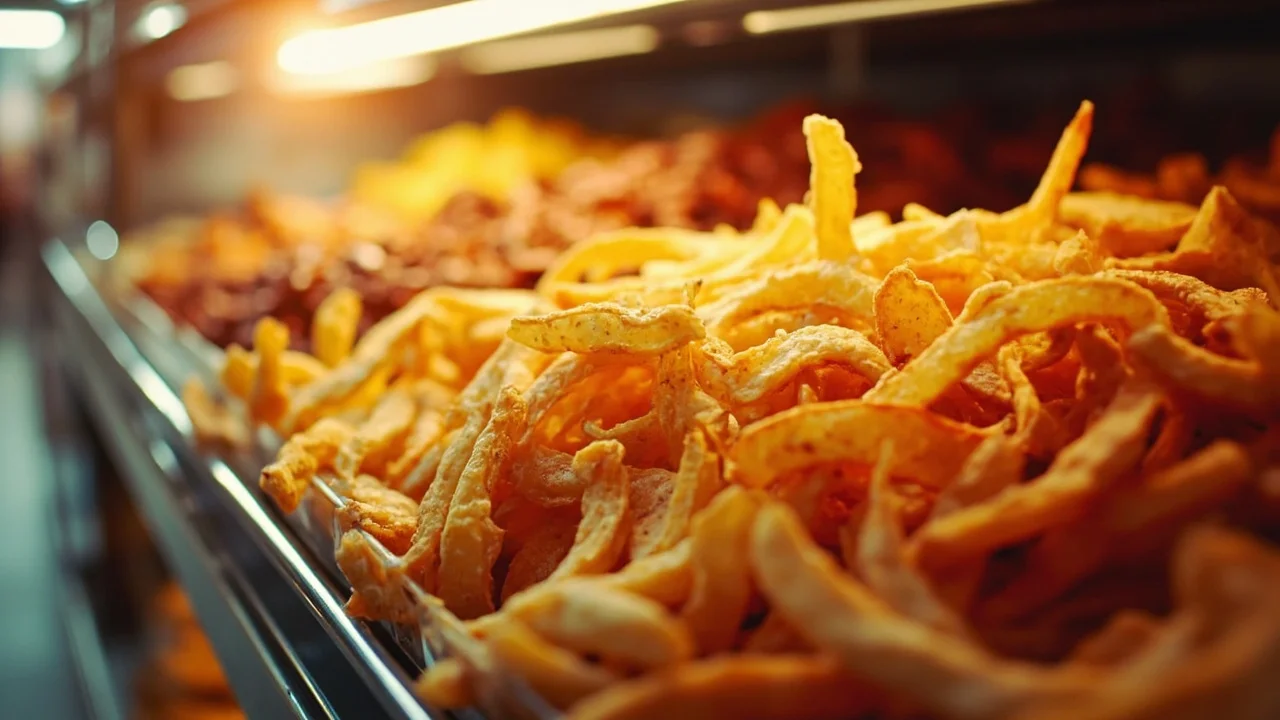
Industry application and market overview for Imported Snacks Market Report.
2. Market Analysis
The global snacking market was valued at $1.2 trillion in 2025, and the imported snacks segment accounts for roughly 12-15% of that total, or approximately $150-180 billion. By 2026, the overall market is projected to hit $1.3 trillion, and imported snacks are expected to grow at a compound annual rate of 8-10%, significantly outpacing the 4-5% growth of domestic snack categories. The market is on track to reach $1.8 trillion by 2034, with imported products potentially doubling their share to 20-25%.
Three major growth drivers are fueling this expansion. First, urbanization is accelerating globally, with 68% of the world's population projected to live in cities by 2030. Urban consumers have higher disposable incomes and greater exposure to international cuisines, making them prime targets for imported snacks. In China alone, imported snack sales grew by 22% in 2024, driven by young professionals in tier-1 cities seeking Korean seaweed snacks and Italian biscotti.
Second, changing dietary patterns are creating demand for functional imported snacks. The 'Powerhouse Protein' trend—one of the top ten snack trends for 2026—is driving imports of high-protein options like grass-fed beef jerky from Argentina or roasted chickpeas from India. These products command a 40% price premium over standard snacks and are growing at 15% annually. Third, the rise of e-commerce platforms specializing in cross-border trade has lowered barriers to entry. Platforms like Alibaba's Tmall Global and Amazon Global now host over 10,000 imported snack SKUs, up from 3,000 in 2022, making it easier for small-to-midsize buyers to access global suppliers.
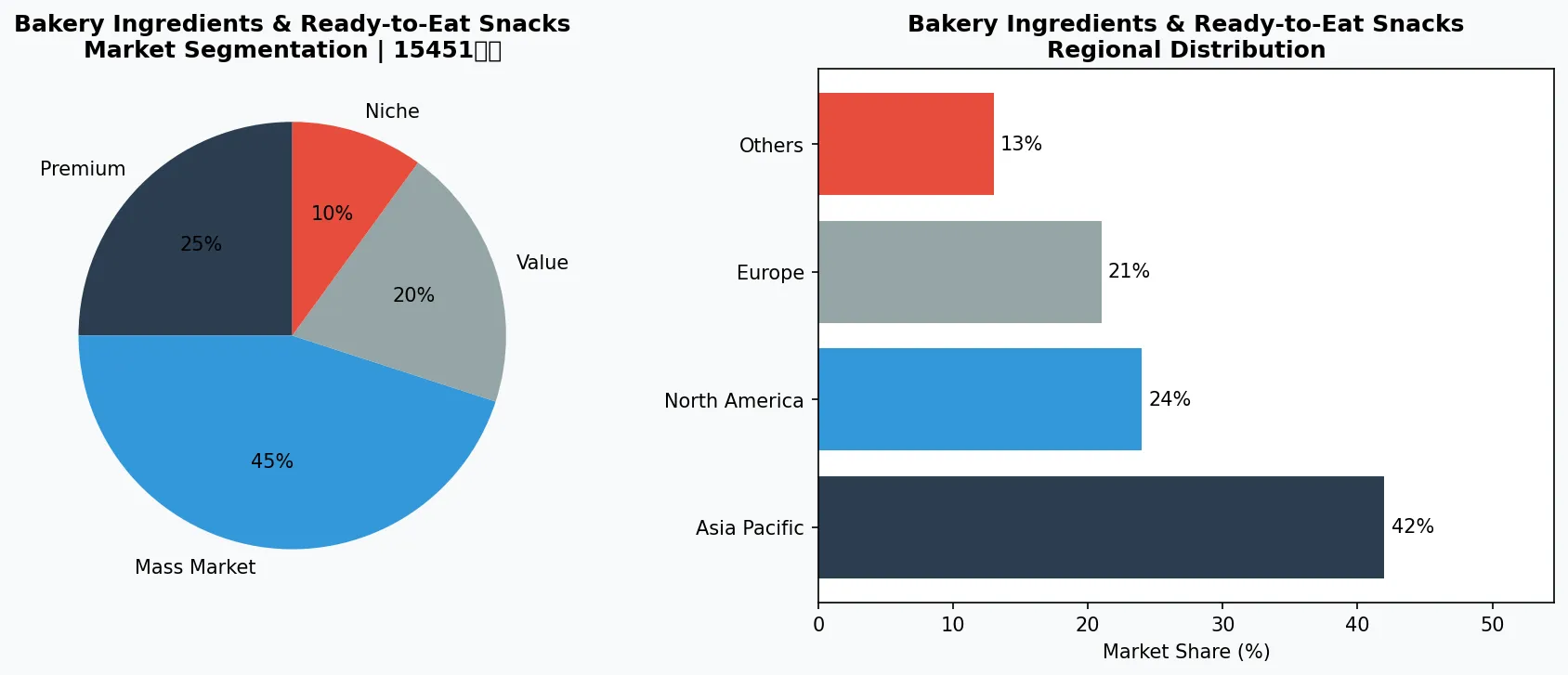
Market segmentation and regional distribution for Bakery Ingredients & Ready-to-Eat Snacks - Imported Snacks Market Report.
3. Product Categories
The imported snacks market can be organized into four distinct product categories, each with unique sourcing dynamics.
Premium & Artisanal Tier
High-margin specialty products targeting affluent consumers who prioritize quality, craftsmanship, and unique attributes.
Mass Market Mainstream
Volume-driven products serving price-conscious mainstream consumers with reliable quality at accessible price points.
Functional & Niche Segment
Targeted products addressing specific health concerns, dietary requirements, or lifestyle preferences beyond basic needs.
First, **Premium Bakery & Confectionery** includes imported cookies, crackers, and chocolate from Europe. Belgian chocolate brands like Godiva and Italian panettone from Bauli are perennial favorites, commanding prices of $15-30 per unit in Asian markets. These products rely on heritage branding and are often purchased for gifting, making them less price-sensitive.
Second, **Savory & Spicy Snacks** are experiencing explosive growth, fueled by consumer demand for bold flavors. Korean spicy rice cakes (tteokbokki) and Mexican chili-lime chips are among the fastest-growing sub-categories, with sales up 35% year-over-year in the U.S. market. These products appeal to younger demographics seeking authentic, Instagrammable experiences.
Third, **Health-Oriented Imports** include nuts, seeds, and protein bars from regions like the Middle East (pistachios from Iran) or Australia (macadamia nuts). These products benefit from the 'justified choices' trend, where consumers seek snacks that align with wellness goals without sacrificing taste. Imported almond butter from Spain, for example, has seen a 28% sales increase in 2025.
Fourth, **Puffed & Extruded Snacks** from Asia—particularly Japanese and Korean brands—are dominating the 'multisensory indulgence' trend. Products like shrimp crackers (kaki no tane) and wasabi peas offer unique textures and flavors that domestic alternatives cannot replicate. These items are typically low-cost (retailing at $2-5) but high-margin for importers due to their novelty appeal.
4. Leading Players
Three key players dominate the imported snacks landscape, each with a distinct strategy.
Global Market Leader
Multinational player commanding significant market share. Revenue exceeding $50B with operations across 100+ countries, diversified portfolio spanning all major price tiers.
Regional Champion
Dominant force in Asia Pacific with deeply localized product lines, extensive distribution networks, and strong regional retailer relationships.
Innovation Disruptor
Fast-growing challenger disrupting incumbents through breakthrough product innovation, direct-to-consumer models, and data-driven marketing in the bakery ingredients & ready-to-eat snacks space.
**Ferrero Group** (Italy) has aggressively expanded its imported chocolate and hazelnut spread portfolio, leveraging its acquisition of Nestlé's U.S. confectionery business in 2018. The company focuses on premium positioning, with its Kinder brand generating $4.5 billion in global sales in 2024. Ferrero's strategy relies on limited-edition imports tied to holidays—like seasonal Ferrero Rocher gift boxes—which sell out within weeks in markets like China and the Middle East.
**Calbee** (Japan) leads the Asian puffed snack segment, with its shrimp crackers and potato chips exported to over 30 countries. Calbee reported a 19% revenue increase in its international division in 2024, driven by demand for its 'multisensory' products. The company invests heavily in flavor innovation, launching region-specific variants like wasabi for North America and truffle for Europe, ensuring its imports feel locally relevant.
**The Lorenz Snack-World** (Germany) is a key player in the premium savory snack space, exporting brands like Naturals and Crunchips. Lorenz targets health-conscious consumers with baked, non-GMO crackers and chips. Its 'justified choices' marketing emphasizes clean labels and sustainable sourcing, a strategy that has boosted its U.S. import sales by 27% in 2025. The company also partners with distributors to offer private-label imported snacks, lowering the barrier for smaller retailers.
5. Market Trends
1. 1. Powerhouse
1. Powerhouse Protein
2. 2. Multisensory
2. Multisensory Indulgence
3. 3. Occasion-Based
3. Occasion-Based Snacking
6. Regional Markets
Asia Pacific — The Growth Engine
The world's largest and fastest-growing region, led by China, India, and Southeast Asia. Urbanization, rising middle class, and digital retail adoption are primary catalysts.
North America — Premium & Wellness Driven
A mature market with strong health-and-wellness orientation, sustainability commitments, and robust demand for premium and functional products.
Europe — Quality & Regulatory Leadership
A developed market with stringent quality, safety, and environmental regulations. Strong demand for organic, locally sourced, and ethically certified products.
7. Investment Outlook
Two concrete opportunities stand out for B2B buyers in the imported snacks market. First, sourcing from emerging snack powerhouses like South Korea and Thailand offers cost advantages—Korean puffed snacks are 20% cheaper to import than Japanese equivalents due to favorable trade agreements. Second, investing in private-label imported snacks allows distributors to capture margins that branded products cannot match. A mid-sized U.S. distributor recently reported 35% gross margins on private-label imported crackers versus 22% on branded ones.
However, one risk looms: supply chain volatility. Imported snacks rely on complex cold-chain logistics for chocolate and fresh-baked goods, and shipping costs have risen 18% since 2024 due to port congestion in Rotterdam and Shanghai. Buyers should lock in multi-year contracts with logistics providers and diversify sourcing across at least two regions to mitigate disruption. The winners in this $1.8 trillion market will be those who combine trend intelligence with operational resilience.
Strategic Considerations:
- Technology & AI Integration: Artificial intelligence and IoT are revolutionizing production efficiency, quality assurance, and demand forecasting across the supply chain.
- Sustainability as Business Strategy: Regulatory pressure and consumer expectations are making environmental commitments essential, not optional.
- Transparency & Traceability: Consumers demand increasingly granular information about product origins, ingredients, and production methods.
- Emerging Market Penetration: Africa, Latin America, and second-tier Asian cities represent the next wave of volume growth.
Make Informed Decisions in the Imported Snacks Market Report Market
Product quality and sourcing integrity directly impact business outcomes. Discover how Verity Rank's verification platform helps industry participants source with greater confidence.
Contact Verity Rank TodayFurther Reading: Explore additional market intelligence from Grand View Research and Mordor Intelligence.
This article is for informational purposes only, based on publicly available industry data and market reports as of 2026-04-24. All market figures are estimates and may vary from actual results.